
Beyond Babylon's Fall: Embracing the Untamed Feminine and the Sacred Earth
Honoring the Divine through Embodying the Wild and the Sensual

The Whore of Babylon: A Fear Mirror
In contemplating the Book of Revelation, or any channeled dream or prophecy, it's important to first acknowledge the biases that may have shaped the vision. As a man of his time, John would have been influenced by cultural fears of sensuality, femininity, and moral corruption. These biases may have unconsciously colored the visions he channeled from the angel, reflecting not only the collective anxieties and moral frameworks of his day but also his cultural understanding of what a messenger from the divine would even look like. The “angel” John encountered was possibly an entity or energy that could have been perceived through a different lens: an alien, a demon, a fairy, an animal... What John interpreted as an angelic figure may have been a manifestation of a deeper intelligence that was filtered through his cultural, religious, and psychological lens, which preferred familiar archetypes and symbols. The message he received was not only divine but also mediated by the cultural context in which he existed, further complicating and expanding the notion of what is “truth” in mystical experience.
With any mystical vision, discernment becomes key: recognizing which parts may serve universal truths and which may reveal the karmic and cultural lens of the visionary. John’s portrayal of Babylon the Great as a corrupted “whore” likely mirrors not only divine messages but also his incarnation’s specific lessons and limitations, reflecting society’s struggle to integrate the wild and the sensual with spiritual ideals. This discernment invites us to see this archetype as more than an image of ruin and indulgence, but as a call to balance our inner chaos with grace—a balance John himself may not have fully realized but which his vision allows us to explore.
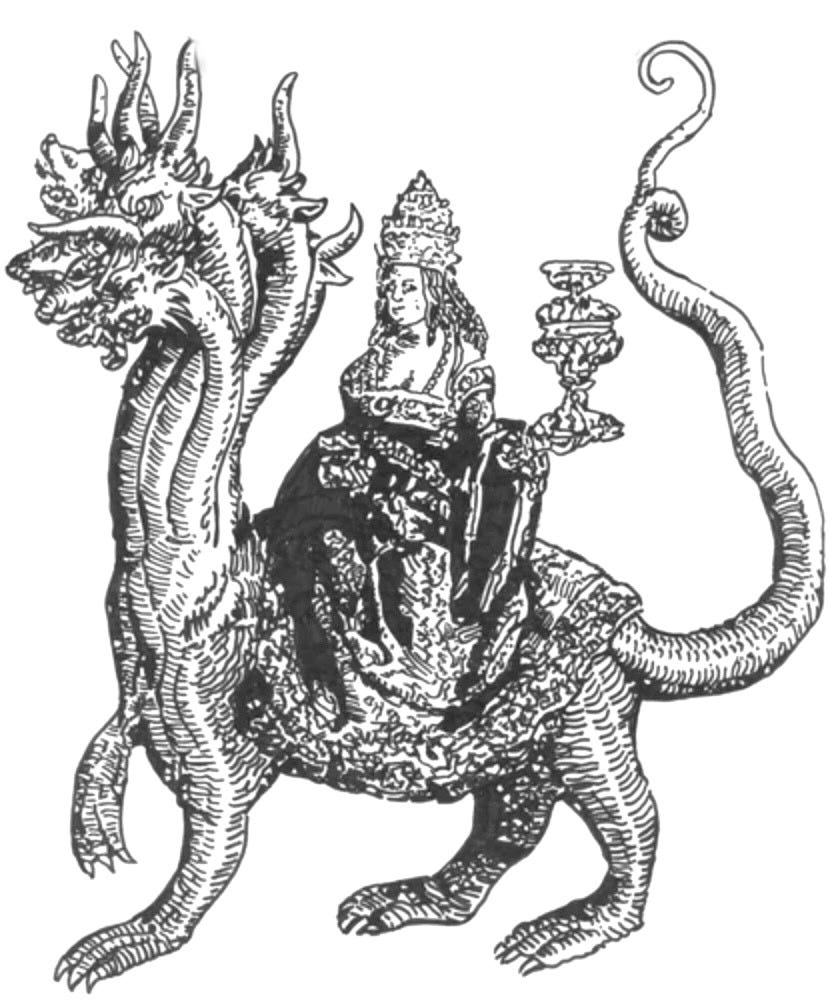
Most classic interpretations of Revelation frame this vision as a warning against extreme hedonism, with the image of the “whore” serving as a vessel to embody all that is evil and corrupt. Reveling in decadence, she becomes a scapegoat for society’s deepest fears—particularly those surrounding unchecked desire, excess, and indulgence. This symbolism captures the collective anxiety over a society overcome by pleasure seeking and moral decay, reflecting a fear that, in embracing the sensual and the wild, we might lose ourselves entirely. As an embodiment of the dangers of yielding to desire without restraint, the “whore” serves as a mirror of the consequences feared from unbridled human passions.
While there is a deep truth to this warning, as with any stark, dualistic view of “good” and “evil,” it is not the whole picture. The interpretation of the Whore of Babylon as a symbol of pure evil fails to capture the deeper mystery she holds, the wild and sacred force that our culture has long sought to suppress. She is not just the personification of excess. She is a complex archetype who embodies the mysteries of the feminine, the body, and of Nature herself.
Crowley’s Scarlet Woman: Power and Projection
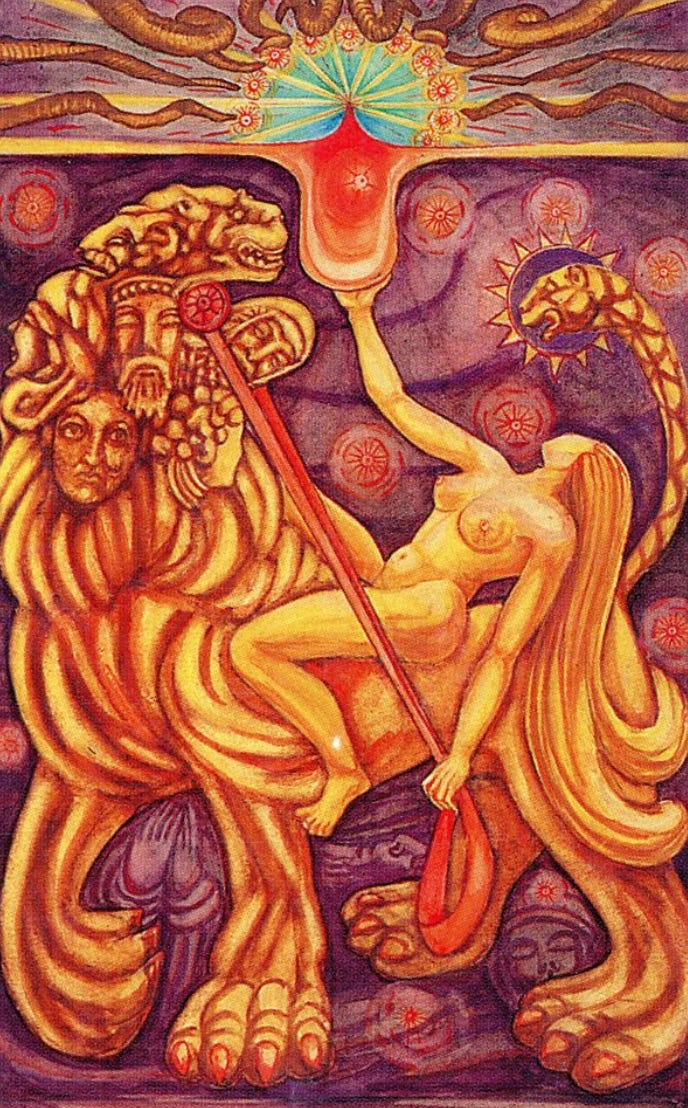
Then there’s ole uncle Aleister Crowley, swinging to the opposite extreme. Crowley moved beyond conventional moral views, seeing the Scarlet Woman as a source of strength and desire as a powerful channel for spiritual energy. By renaming her “Babalon,” following her instructions from a vision, he aimed to reclaim her “proper” form—a ritual act of honoring her power. Crowley’s vision of Babalon was not just about sexual liberation, but also the dissolution of dualistic thought—embracing the totality of experience and shattering boundaries between holy and unholy, masculine and feminine, life and death. Yet, even as he sought to transcend normative views of the feminine, he ultimately fell into the same trap: the Scarlet Woman remained, for him, a tool to be used for his own spiritual gain.
Although Crowley sought to glorify Babalon, he clearly struggled with his own patriarchal inclinations and desire for control. The figure of Babalon served both as an idealized, powerful entity and as a projection of Crowley’s desire for dominance. Crowley’s approach to the Scarlet Woman, though incredibly revolutionary for his time, unfortunately set a precedent within certain occult circles that continues to perpetuate exploitation of the feminine in the name of “spiritual advancement.” This legacy remains influential, feeding a perspective in some spiritual and esoteric communities that views the feminine as a means to an end rather than a force to honor in its own right. To Crowley, the Scarlet Woman was the ideal partner for the Magus, serving both as a physical embodiment of Babalon and as a conduit through which divine power could be channeled. This is the healthy expression of the Shakti-Shiva/Yin-Yang role play, as long as both parties are equally aware of this mutual power exchange. However, through much of his work, rather than truly viewing her as an autonomous force, he saw her as merely a vessel for his will. Yet another symbol to be conquered and controlled.
This tendency to appropriate and exploit the feminine, both in women and in Nature, reflects a broader pattern: the persistent desire to conquer and contain that which cannot be fully understood or possessed. Our culture has attempted to subdue and manipulate the wild, untamed aspects of existence—the sensual, the mysterious, the subconscious—simply because they cannot be fully comprehended through the lens of reason alone. This is where the Whore of Babylon, and the broader fullness of the feminine archetype, becomes “dangerous”—she represents what is beyond control, beyond rationality, and beyond ownership.
Society’s Madonna-Whore Complex and Jung's Anima/Animus
The Madonna-Whore complex offers another lens through which we can understand the ongoing attempts to control and diminish the feminine. Through this lens, women are split into two extreme archetypes: the virtuous, untouchable virgin Madonna and the debased yet sexually attuned Whore. This binary traps women into roles that serve male projections, leaving little room for their full, complex humanity. The Whore of Babylon is obviously the ultimate symbol of the “Whore” in this dichotomy, vilified as the embodiment of sexual excess and moral decay. Yet, this distortion only mirrors the deep discomfort society feels toward unbridled feminine power and sensuality, revealing a fear not just of women, but of the unpredictable forces of nature and of the body.
Pornography and parasocial connections often become the shadow stage for these unresolved projections, offering a space where society’s suppressed desires can play out without accountability or integration. It allows for the seemingly safe expression of the Whore archetype, but in a distorted, often dehumanizing and commodified way that reinforces the perceived split between the sacred and the profane. Rather than facing the full spectrum of feminine energy, modern culture keeps these aspects of womanhood compartmentalized, further alienating men from their own internal feminine—what Carl Jung called the Anima.
Jung’s concept of the Anima refers to the unconscious feminine side of a man, the emotional, mysterious, and intuitive aspects of his psyche. When men project their unresolved relationship with the feminine onto women (or symbols like the Whore of Babylon or Mother Mary), they are often grappling with their own disowned Anima. A man who cannot integrate both the Madonna and the Whore within his psyche will find himself constantly oscillating between idealization and degradation of the feminine, which extends into his relationship with women and nature alike. Integrating the Anima, in contrast, allows for a more holistic relationship with the feminine, where she is no longer a vessel for projection but a dynamic, autonomous force that invites inspiration and transformation into his life.
This disconnection from feminine energy is not exclusive to men; it shows up in women, too, as society pressures us to adopt hyper-masculine traits to thrive within structures that prioritize control, productivity, and competition. The entire “girlboss” phenomenon encourages women to succeed by embodying traits like assertiveness and relentless ambition—often at the expense of our intuition and emotional depth—all in the name of “equality.” In corporate settings where linear, results-driven qualities are valued, women may feel compelled to downplay their empathy, creativity, and cyclical wisdom. This pendulum swing from their holistic nature often leads to burnout, disconnection, and dissatisfaction as they attempt to meet rigid, linear standards of success. After countless generations without many healthy masculine frameworks to help shape our Animus—Jung’s concept of the masculine aspect of a woman’s psyche—we now face a strange and daunting predicament: to surrender to the resurrection of an ancient, unknown Animus and forge an internal union with this unfamiliar presence in pursuit of balance within.
Just as the feminine archetypes are compartmentalized and controlled, nature itself is subjected to society’s attempts at domination. Mowing the lawn, trimming the hedges, building fences, putting animals in zoos, all to keep the wilderness far from view. This collective anxiety surrounding the ambiguous keeps every human being from embracing vulnerability, intuition, and authenticity—qualities that allow us to connect with our deeper, natural selves. The fear of losing control over what is unpredictable—whether within the psyche or in the environment—extends from the inside outward, shaping how we exploit and engage with the Earth itself.
Embodied Archetypes: Feminine Darkness
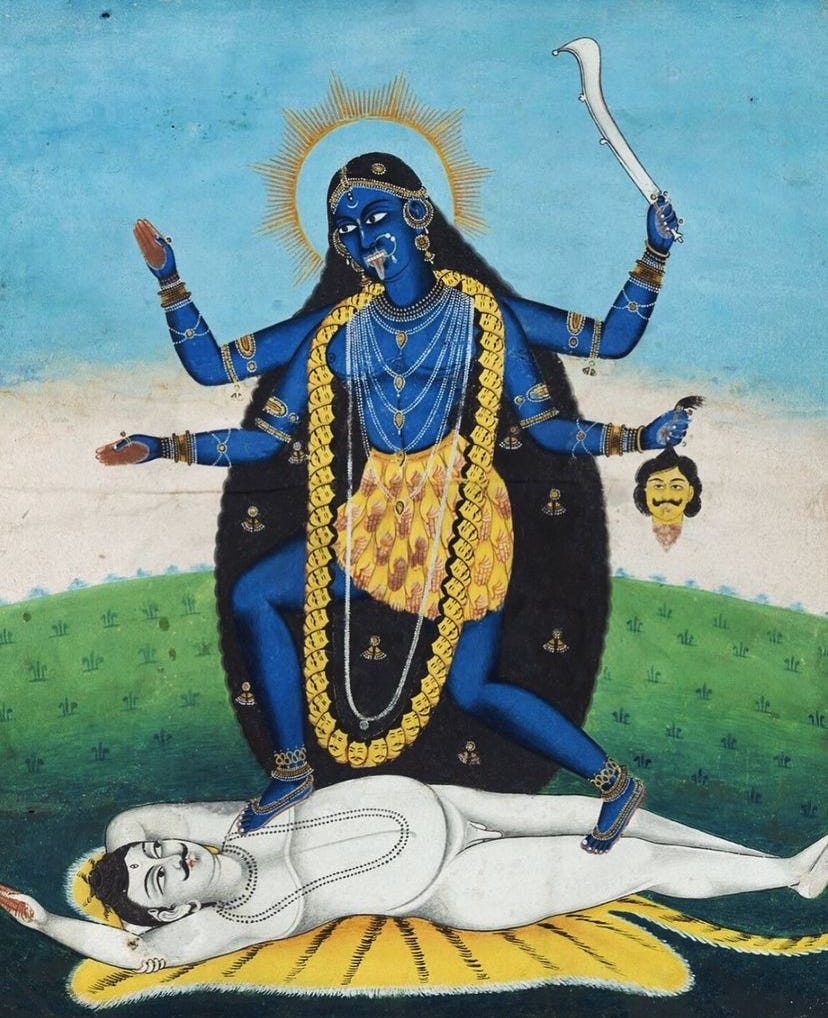
This archetype shows up in several iterations and forms throughout mythology. Kali, the Hindu goddess of destruction and transformation, is perhaps the most direct embodiment of Nature’s wildness. Often depicted in terrifyingly electric form, with a necklace of skulls and a skirt of severed arms, Kali is both creator and destroyer. She represents the cycle of life, death, and rebirth—the necessary destruction that precedes regeneration. While she is feared for her destructive aspect, Kali’s ego slaying power is essential for transformation and liberation. Like the Whore of Babylon, Kali holds a mirror up to society’s discomfort with the chaotic forces of nature, yet without her destructive energy, true creation and renewal cannot occur. Sometimes we must set fire to the land to enrich the soil, providing greater fertility.
Lilith—Adam’s first wife, not made of his rib, but a separate and sovereign being—who refused to submit to him and chose exile over subjugation, is often portrayed as a demon in Judeo-Christian lore. Lilith’s defiance speaks to a rejection of the roles imposed on women. She is the embodiment of the feminine that refuses to be controlled or diminished. Like Babylon the Great, Lilith has been demonized as a symbol of sexual transgression, but beneath this vilification is something much deeper. Lilith represents the untamed feminine that lives on the fringes of society’s moral codes.
Hekate, the ancient Greek goddess of witchcraft, crossroads, and the night, presides over liminal spaces—the thresholds between worlds. She is a guide to the unseen, associated with magic, death, and the mysteries of the underworld. Hekate embodies the fear of what lies beyond the known and the safe, but she is also a powerful guide for those who choose to journey into the unknown. Hekate holds the keys to the mysteries of the subconscious and the transformative power that lies in embracing the dark.
Each of these goddesses carry aspects of the dark feminine that society has long sought to suppress, out of fear and misunderstanding. But they also offer us a path to reclaiming this wildness in a way that is not about losing ourselves to excess, but about recognizing the power, wisdom, and grace that lies within the feminine mystery. They can act as invitations to connect with the sacredness of the body, the Earth, and the unconscious.
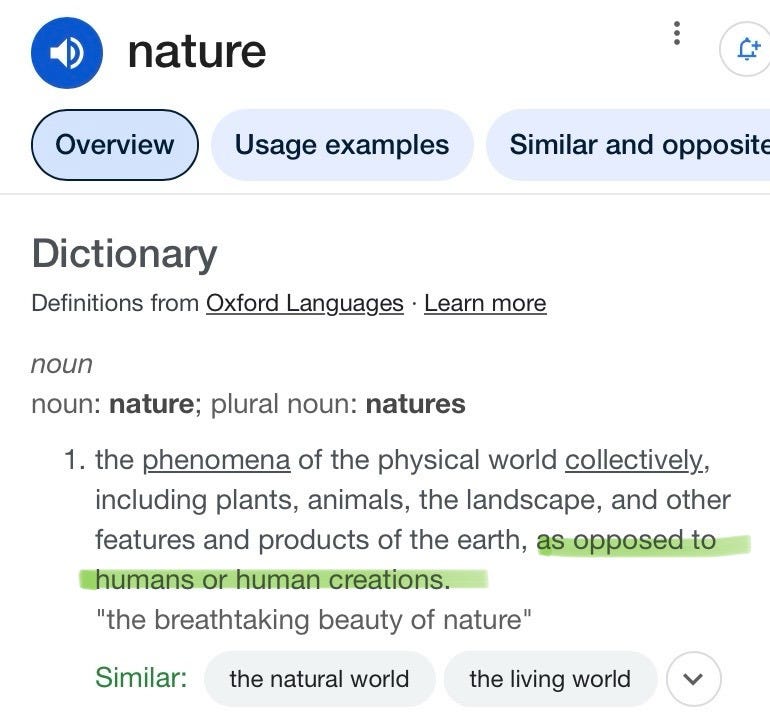
In this context, “wildness” does not refer to pure chaos as the rational mind would define it, but to a natural pulse that only makes sense if you can feel it and allow yourself to dance with it. It represents autonomy, the intrinsic creativity of the natural world, and the cycles of birth, death, and renewal which can’t be constrained by societal order. These archetypes speak to an untamed strength that follows its own rhythms and purposes, indifferent to human attempts to control or categorize it.
Just as society has sought to control and exploit women’s bodies, men’s emotional expression, and to subjugate anyone who plays in liminal space, it has also sought to dominate the Earth. The exploitation of natural resources, the desecration of sacred land, and the relentless pursuit of “growth” and “progress” at any cost reflect the same mindset that seeks to conquer the feminine. In this state of mind, the Earth and women are reduced to objects—resources to be used rather than living, breathing forces to be respected and honored.
But Nature, like the feminine, resists domination. The Earth cannot be fully tamed, and attempts to control her inevitably lead to consequences: ecological destruction, climate crises, and the loss of biodiversity. Just as the feminine holds the power of creation and destruction, so does the Earth. When we fail to honor the wildness and mystery of Nature, we invite destruction—not because Nature is vengeful, but because we have forgotten how to live in harmony with her cycles and forces.
The Dangers of Disconnection
The danger of not integrating the wild feminine and the forces of Nature as a culture is abundantly clear. When we suppress these energies, we create imbalance—both within ourselves and in the world around us. When we view the feminine or Nature as something to be conquered, we cut ourselves off from the source of life itself. We see the consequences of this disconnection in the environmental crises in our world today. The Earth, like the feminine, cannot be endlessly exploited without consequence.
Reclaiming the Whore of Babylon, Kali, Lilith, Hekate—the wild feminine in all her forms—is a radical act of resynthesizing, one that calls us to reawaken our connection with the Earth, to honor life’s cycles of birth and death, and to embrace the mystery and power that resides within. In this reclamation, we not only reconnect with ourselves but also deepen our relationship with the planet that sustains and nurtures us. The Earth does not need to be controlled; she needs to be embodied and partnered with. This partnership with the wild feminine, and honoring our place within the ecosystem of life, is key to our survival and the survival of future generations.
Universal Prophecies: Warnings From Beyond
Many indigenous and ancient prophecies forewarn of humanity's divergence from natural harmony, often highlighting a split in societal paths similar to the narrative in Revelation. These prophecies offer both caution and hope for reconciliation, urging humanity to honor natural cycles and recognize the sacred interconnectedness of all life.
The Hopi prophecy of the Fourth World describes a period marked by division, environmental destruction, and societal excess—a phase that will ultimately culminate in the emergence of a Fifth World, depending on humanity's return to unity and respect for Earth. Within this vision, humanity faces a choice: continue the path of consumption and division, or embrace a life rooted in balance and harmony with nature. The Hopi people describe the appearance of a “Blue Star Kachina” as a celestial harbinger of purification, signaling humanity’s last chance to shift toward peace and sustainability.
Similarly, the Cree prophecy of the “Warriors of the Rainbow” speaks of a future when people of all backgrounds will rise to restore balance to Earth. According to this vision, these “warriors” will recognize the importance of protecting natural resources, valuing unity, and restoring spiritual connection. This prophecy, like Revelation, warns against the dangers of exploitation, telling of an era when humans will either continue on a destructive path or embrace a collective responsibility to nurture life.
Ancient Egyptian cosmology provides another compelling parallel. The concept of maat—a principle representing cosmic order, truth, and justice—was viewed as essential to sustaining harmony. When the balance of maat was disrupted, chaos (isfet) would ensue. Pharaohs were charged with upholding maat, believing that only through balance society could flourish. This alignment with cosmic order, while ancient, resonates deeply with modern challenges. The call to live in harmony with natural and spiritual laws is timeless.
About 10 years ago, I also had a profound dream involving these themes, long before encountering any of these prophecies or delving at all into the Bible. As I came across these universal ideas over time, the dream began to hold even greater weight in my mind. In the dream, platinum glowing discs descended from the sky amplifying a booming voice proclaiming an ultimatum: this way or that way! I witnessed a division in humanity—those who chose a mind-based technology-driven path devoid of connection to Earth or the body, and those who rejected technology completely to live in close harmony with nature. I argued with the voice. Another option, a unified path, seemed obvious to me—a path where technology could nourish rather than exploit. In this vision, a group dedicated to integrating technology and nature emerged, working to heal and sustain life through innovation aligned with natural cycles. Technology could support, rather than detract from, the wild, organic world—a step toward embodying maat on a global scale.
15 Then the angel said to me, “The waters you saw, where the prostitute sits, are peoples, multitudes, nations and languages.
16 The beast and the ten horns you saw will hate the prostitute. They will bring her to ruin and leave her naked; they will eat her flesh and burn her with fire.
17 For God has put it into their hearts to accomplish his purpose by agreeing to hand over to the beast their royal authority, until God’s words are fulfilled.
18 She is the great city (Siddhi? Maybe a stretch, but perhaps you’re picking up what I’m putting down here) which reigneth over the kings of the earth.
Embracing the Exiled Self
This piece is written from my perspective—as a woman and artist who has often walked the tightrope between rigid dualities, experiencing firsthand the challenges that come with it. I speak from direct experience, filtered through the lens of my own karmic limitations as a human being. While my interpretations are personal, these themes are universal. The archetype of the “other” belongs to anyone who has been scapegoated, cast aside, or labeled unacceptable for existing outside society’s accepted “truths,” whether due to race, class, sexual orientation, or any other expression deemed unfit.
All towers built on unstable ground must fall. We’ve been at an invisible-to-most crossroads for quite some time. Each of us has a choice to make, and we make it daily, whether consciously or unconsciously. Integration invites connection and sustainability. Those who integrate the wild feminine within themselves can access creativity, intuition, and empathy, while cultures that do so treat the Earth as a partner, leading to ecological practices that nurture rather than deplete. Control fuels alienation, exploitation, and environmental and cultural collapse. It perpetuates the destructive view that both women and the Earth are resources to be dominated, creating cycles of emotional and ecological harm that mirror one another. By choosing integration over control, we align with a model that respects the autonomy and depth of both the feminine and the natural world. This choice invites true partnership, essential for both psychological wholeness and ecological resilience.
To me, the Whore of Babylon in Revelation embodies the wildness and mystery that our society has long sought to suppress and cast into the shadows. She represents the parts of ourselves—and the world—that we have exiled, labeled as dangerous, and sought to control. The cultural excesses we see today are a reactive pendulum swing after centuries of keeping Her repressed. By embracing the Red Lady within our own psyches, we honor the wild, the sensual, and the mysterious aspects of ourselves with grace and reverence instead of fear.
Through the direct experience of being here in a body—through pleasure and pain, creation and destruction—we can use this power to heal not only our fragmented selves but also our relationship with the Earth. The Earth, who, undeniably, bows to no king. And neither should we.
this is a wonderful article 🙂